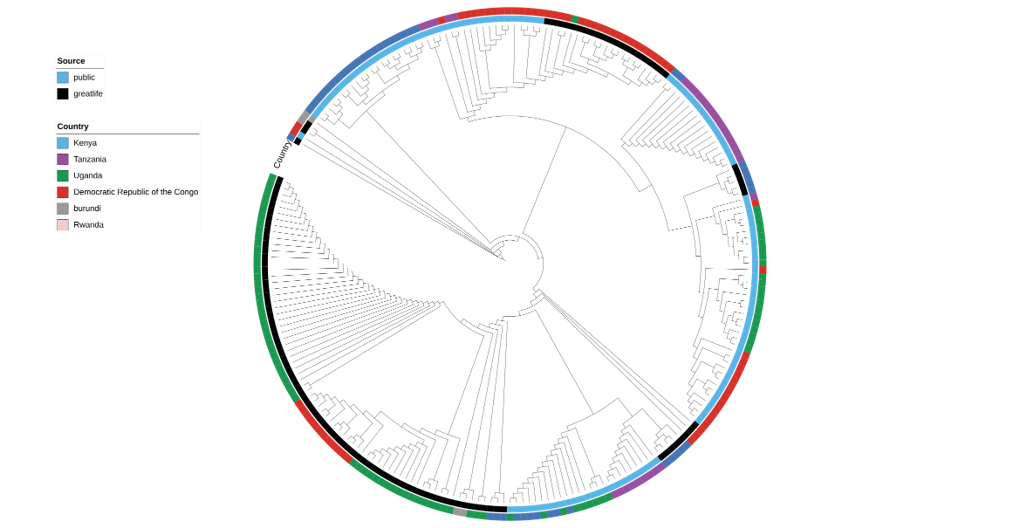
Here I describe ongoing work and planned analyses on Vibrio cholerae genomes generated through the GREAT-LIFE project, integrated with external public genomes and complementary epidemiological data. The aim is to build a harmonized genomic-epidemiological framework that supports investigation of cholera transmission dynamics in the Great Lakes region. Presented is the progress on pilot comparative analyses including phylogenetic diversity of these genomes. The broader goal is to move beyond genome description alone, towards an integrated model that connects genomics with epidemiological, spatial, and contextual data to better understand cholera spread and inform surveillance and public health response.
The second to last slide has information on the new project 'OCTOPUS' - funded by EDCTP3, developed by partners collaboration on enhancing capacity building in the region.
Rene Ndoyi’s presentation