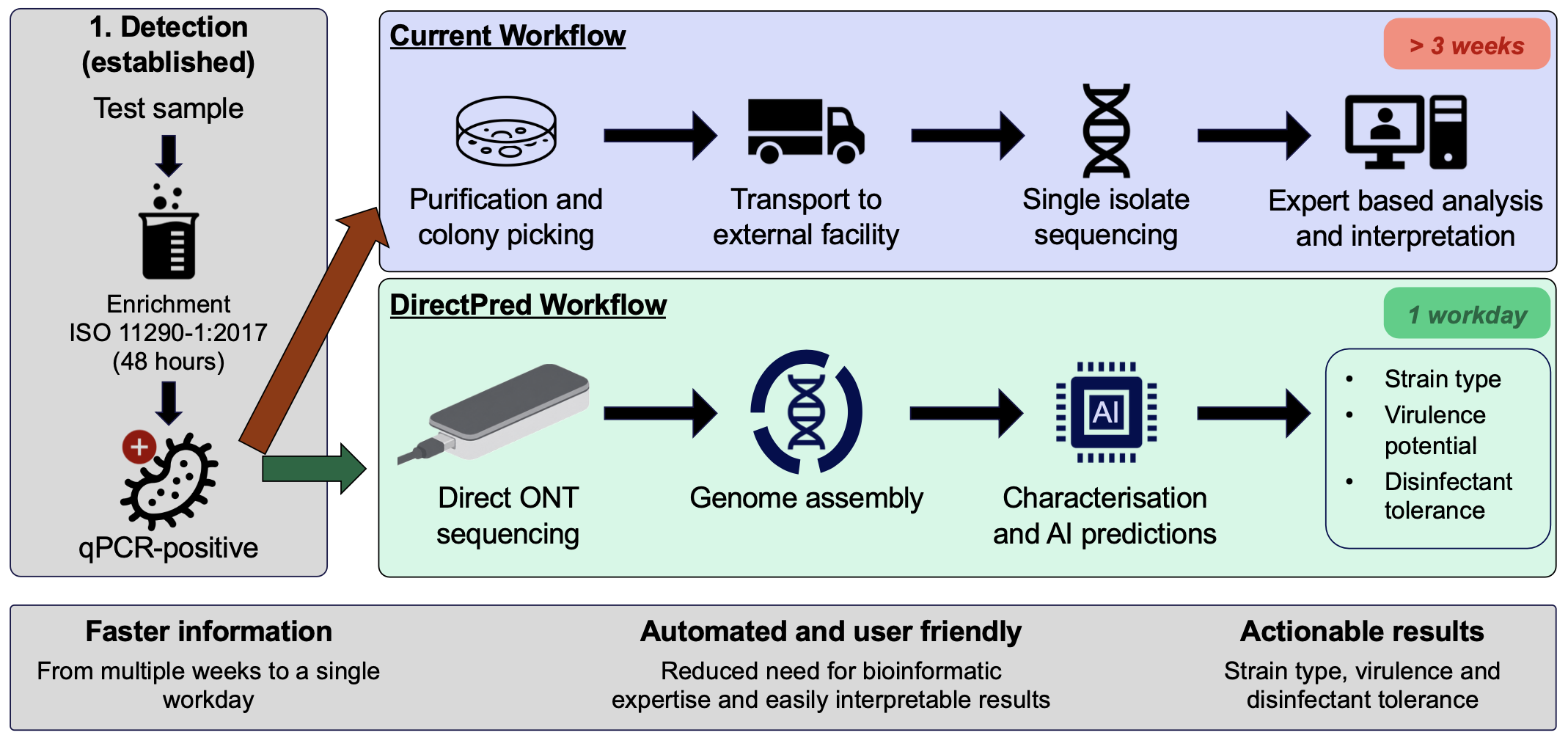
This presentation gives an update on the progress of my PhD project, DirectPred, which aims to develop an automated pipeline for rapid characterisation of Listeria monocytogenes directly from enrichment cultures using long-read metagenomics and machine learning.
First, I introduce the overall goals of DirectPred and explain how the project aims to make genomic characterisation faster and more accessible to the food industry.
The presentation then covers the work carried out during the first development stage, focusing on the challenges and limitations of genome assembly and binning when working with mixtures of closely related Listeria strains and species. Using controlled DNA mixtures, I have evaluated different bioinformatics tools and investigated how sequencing depth, DNA input and strain proportions influence the accuracy and reliability of genome recovery.
Finally, I discuss the findings from this initial stage and introduce the plans for the next phase of the project, where the pipeline will be evaluated using inoculated food samples to better understand the effects of food microbiomes and enrichment on genome recovery.
Marie Fjeldgren Jensen’s presentation