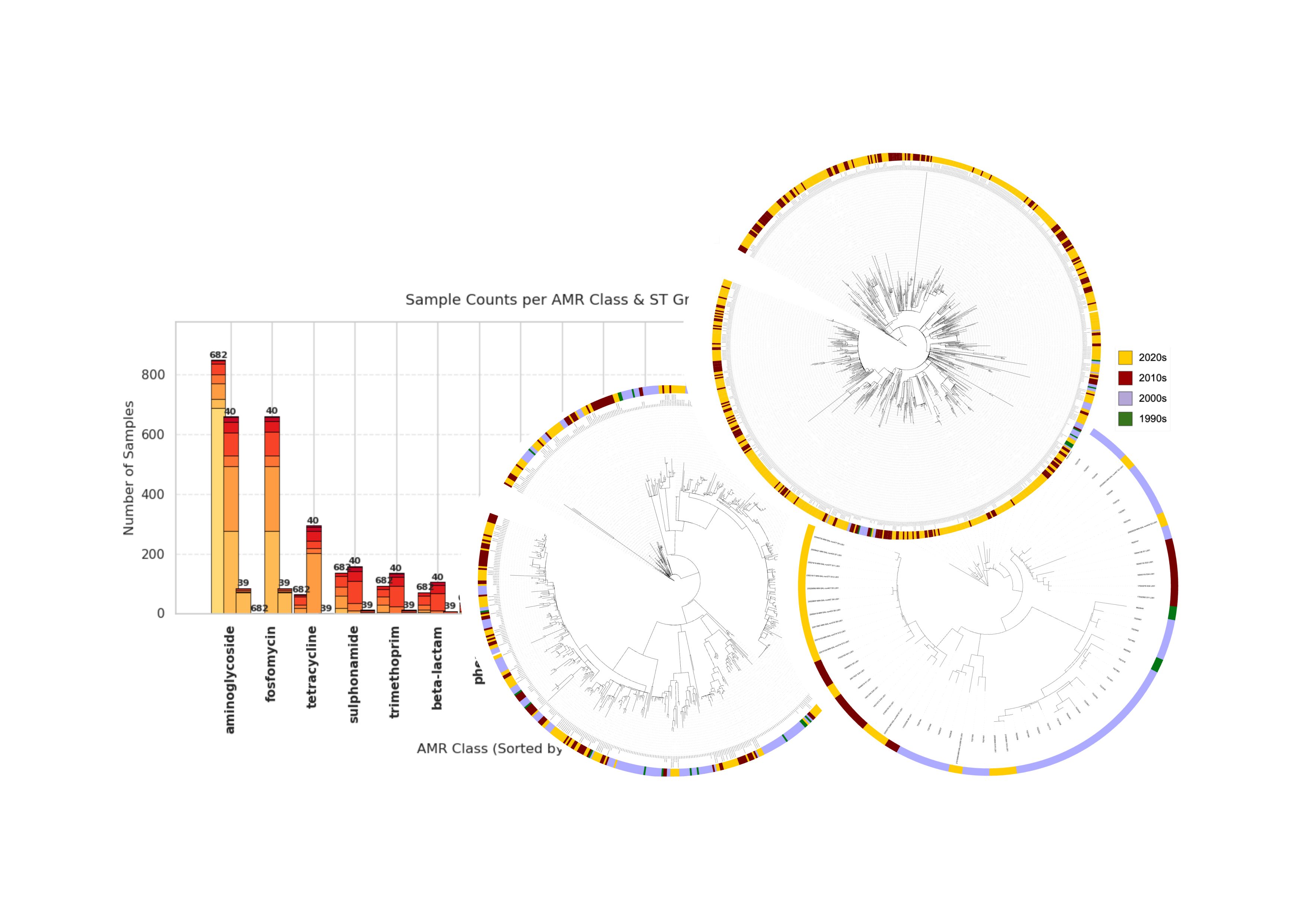
S. Derby is one of the most prevalent serotypes of Salmonella found in Danish pigs. Here I describe the landscape of Salmonella Derby in Danish pigs with a focus on the genomic characteristics of the isolates and the development through time.
I found two major clades; ST40 and ST682, with two distinct survival strategies, and via genomic analysis, I mapped out their content of Salmonella Pathogenic Islands (SPIs), Antimicrobial Resistance Genes (ARGs), and Plasmids. A genome-wide association study (GWAS) reveals additional genes, which are unique to each of the ST types. Moreover, I applied Bayesian Evolution Analysis to determine the effective sample size and try to determine if there are any historical events explaining the population size fluctuations.
The findings indicate a shift from ST40 to ST682. The two sequence types exhibit very different profiles; where ST40 contains more plasmids and ARGs, ST682 confers more SPIs. The GWAS highlight the nutritional versatility of ST40, while ST682 is equipped with genes enabling intestinal colonization and toxin-antitoxin modules not found in ST40.
Mette Bøge Pedersen’s presentation