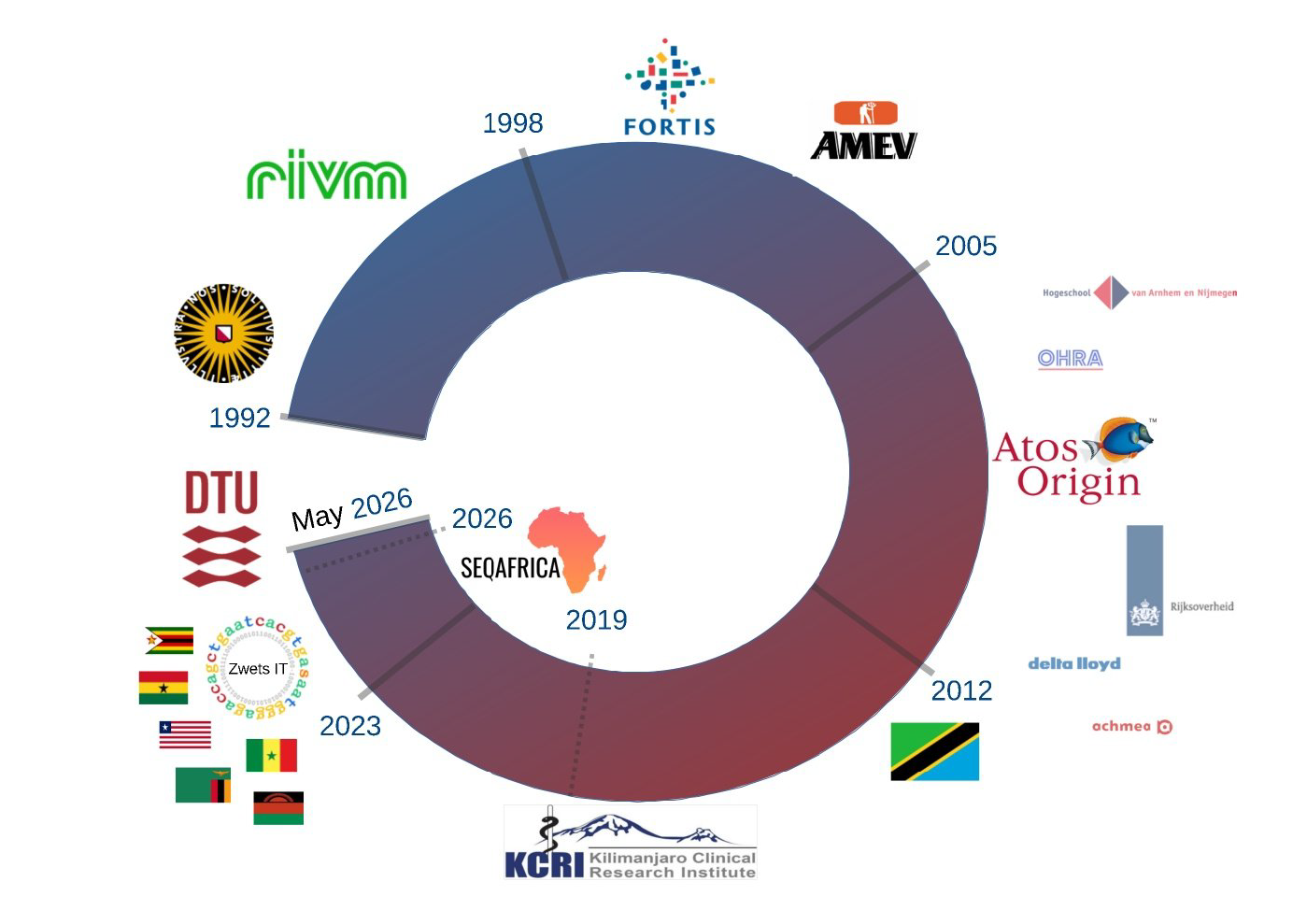
With this presentation I introduced myself to the Research Group for Genomic Epidemiology, which I joined in May this year. My career started out in academic research at Utrecht University and the Dutch National Institute for Public Health and the Environment (RIVM), where I worked as a programmer in various modeling teams. Then came a 14-year stint in IT consulting, initially in-house as a software architect, later as an enterprise architect with the consulting firm Atos Origin.
In 2012, my family and I moved to Tanzania, with the plan to live and work there for one or two years. My wife became Tanzania's second neurologist, and I started out as IT specialist and later became the lead bioinformatician at Kilimanjaro Clinical Research Institute (KCRI). I first met DTU in 2014, when KCRI started a collaboration with the Research Group for Genomic Epidemiology. The "WGS Project" was unique in that it brought not only the first DNA sequencer to East Africa, but also the compute hardware for doing the analyses on-site rather than in "The North". This idea of "democratising sequencing" became a recurrent theme in the various DTU collaborations that followed.
In the SeqTanzania project, we demonstrated how sequencing could be done "in the bush" using laptops and Nanopore sequencers. The SeqAfrica project, a collaboration with the Research Group for Global Capacity Building, expanded the scope to various teams across Africa. Over the fourteen(!) years that we eventually stayed in Tanzania, I worked in many more fascinating genomics projects, built a few HPCs, analysed thousands of isolates, and trained teams across Africa in bioinformatics.
It is an honour and joy to now be part of the Research Group for Genomic Epidemiology at DTU.
Marco van Zwetselaar’s presentation